
The Chain of Command
Across the River and into the TreesThis flow examines how Cantwell’s military authority collides with orders from distant headquarters, leaving him responsible for consequences he cannot control.
increasing Bearing strength in each event
 decreasing
Bearing strength in each eventdecreasingA Career Constrained
A Career Constrained
Rank and memory
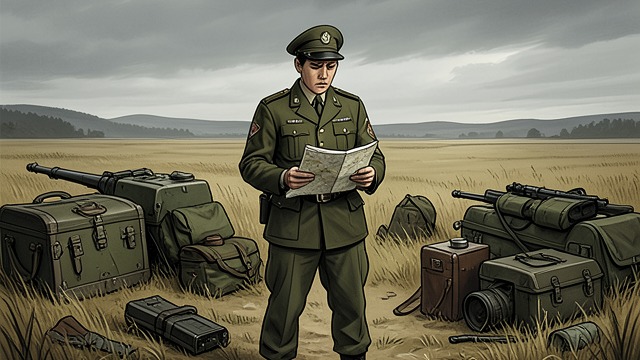
Cantwell recalls that his service in a foreign army during the First World War made him suspect in his own army. His experience and rank have never fully aligned.
Authority with limits
He is accustomed to command, yet knows that promotion and influence do not guarantee freedom to act. That tension later defines his frustration with higher headquarters.
Orders from Afar
Orders from Afar
Distant decisions
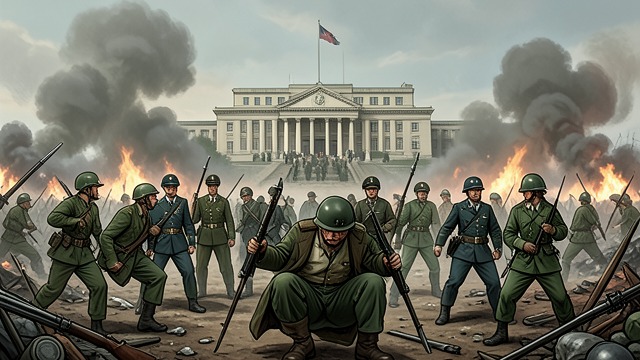
Cantwell describes headquarters presenting an operation as simple from far behind the front. The people who approve the plan are separated from the forests, roads, and men who must carry it out.
A widening divide
The gap between confident briefing and battlefield reality grows as losses mount. Cantwell’s anger is directed less at one villain than at a system that makes distance feel like certainty.
The Unavoidable Assault
The Unavoidable Assault
A compelled plan
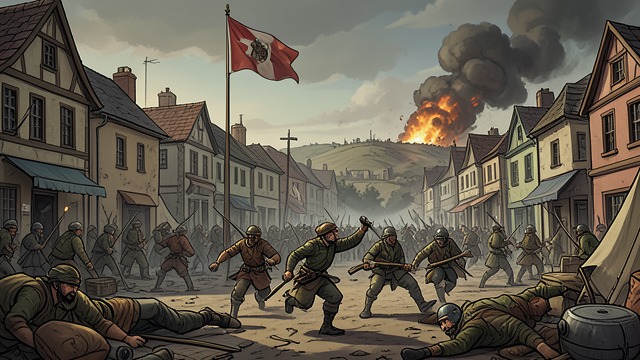
Cantwell explains that a town made important by reports must be taken by assault, even when a negotiated surrender appears possible. His unit loses men and equipment to meet the order.
Responsibility without choice
He does not deny that he executed the attack, but insists that the decision originated higher up. The distinction cannot restore the dead or make his own role disappear.
The Forest Commitment
The Forest Commitment
A regiment sent forward
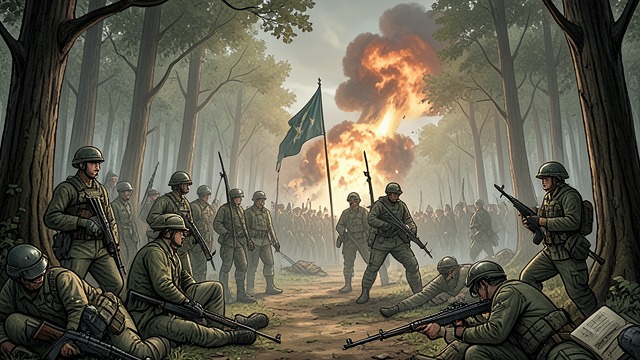
Cantwell remembers being ordered to commit a regiment before the larger attack began. The enemy could identify the unit, and the supposedly concealed plan offered little protection.
Loss at scale
The regiment is destroyed and rebuilt through replacements, while experienced soldiers continue to be lost. Cantwell’s grief is personal because command made him witness the system’s repeated use of men.
Obedience as a Verdict
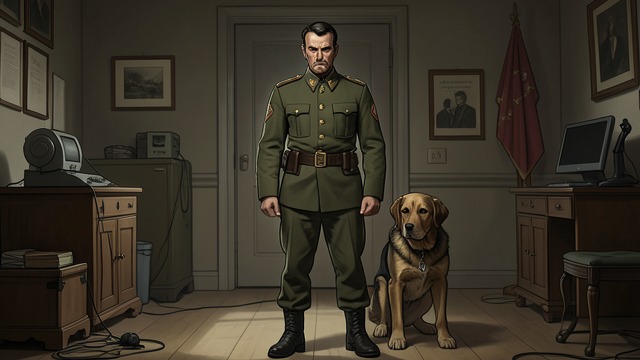
Obedience as a Verdict
The blunt conclusion
Cantwell reduces the army’s demand to a stark principle: a man obeys like a dog and hopes for a good master. The statement is both an explanation and an indictment.
No clean release
He cannot escape responsibility simply by naming the orders that shaped his actions. Renata’s listening gives him a witness, but no absolution.
During his drive from Trieste to Venice
During Cantwell’s account of the Hürtgen operations
During the retelling of a costly town attack
During Cantwell’s account of the first Hürtgen attacks
At the close of Cantwell’s account to Renata
